
The Easiest Way to Get Your Farm Website Online
Let’s be real for a second: most of us aren’t exactly itching to spend a weekend staring at a computer screen. If you’re like me, you’d rather be outside fixing water lines, checking fence, or moving cattle. But at the same time, you know your farm or ranch needs a website. It’s how people find you, trust you, and connect with what you’re doing.
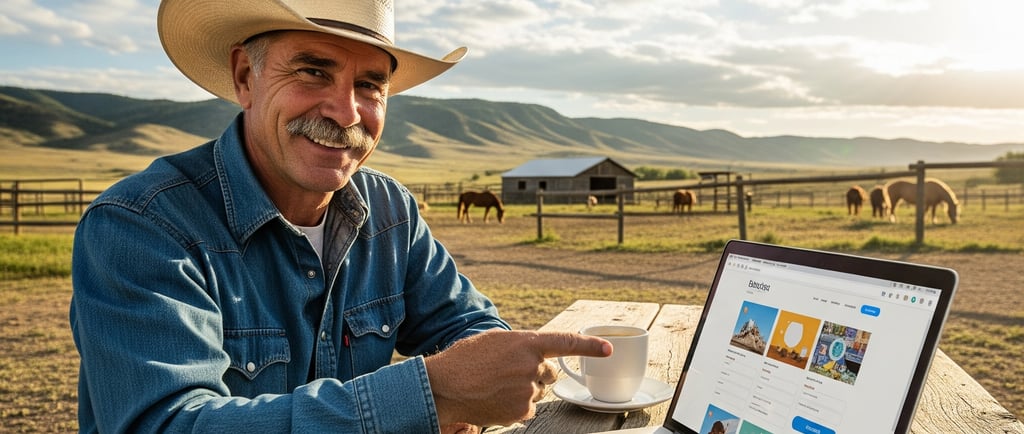
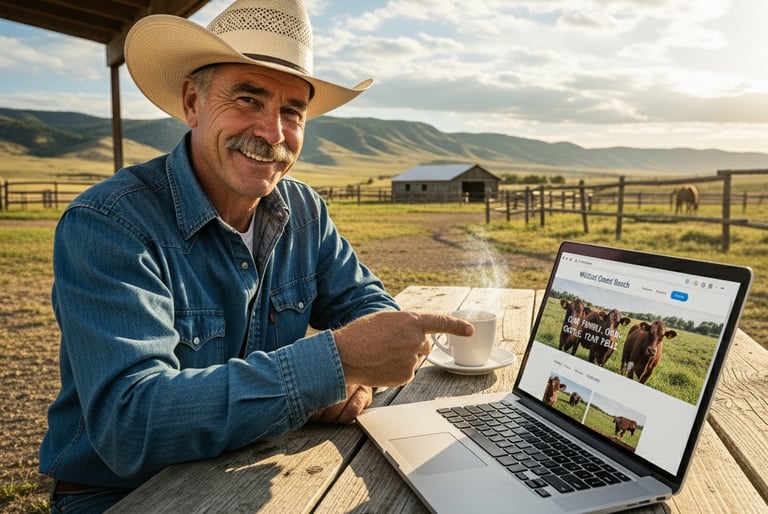
The good news? Getting a farm website online today is way easier than it used to be. You don’t need to hire a big-city web developer or spend months learning complicated software. You can sit down with a cup of coffee, click a few buttons, and by lunchtime your website can be live.
Let’s walk through the easiest way to do it — step by step — no tech jargon, just plain talk.
Step 1: Pick Your Domain Name
Think of your domain name as your farm’s “address” on the internet. It’s what people type in to find you — like SmithFamilyRanch.com or SunnyCreekEggs.com.
Here are a couple of tips:
Keep it simple and easy to spell.
Avoid long dashes or tricky words.
If possible, use your farm or ranch name so folks instantly know it’s you.
Don’t overthink this step. Good enough is good enough.
Step 2: Choose a Website Builder
This is where most people get stuck, but it doesn’t have to be a headache. A website builder is just the tool you use to put your site together.
Here are four options that work especially well for farms and ranches:
Hostinger – Affordable, reliable, and has AI tools that help you build quickly.
Wix – Very user-friendly, with drag-and-drop features. Perfect if you want “fast and simple.”
GoDaddy – One-stop-shop (domain + builder + email). Great if you don’t want multiple accounts.
Each of these works fine — the “best” one depends on what kind of farm website you want.
Step 3: Let the Templates Do the Work
Here’s where a lot of folks breathe a sigh of relief. You don’t have to design your site from scratch. All of these builders come with ready-to-go templates — think of them like blueprints.
If you run a horse training facility, you’ll find templates designed for boarding barns and service businesses. Selling eggs or beef? There are farm shop and small business templates ready to go. Running an agritourism operation? You’ll find event and booking templates too.
All you do is:
Pick the template that looks closest to what you need.
Swap in your farm name, your photos, and your words.
Publish it. Done.
It’s basically like buying a prefab barn kit — most of the work is already handled.
Step 4: Add the Basics
Before you launch, make sure your site has the essentials:
Home page – A friendly welcome and what you do in plain language.
About page – A short story about your farm or ranch (folks love to know who’s behind the food).
Contact page – Phone, email, maybe even a simple form.
Products or Services page – Whether it’s beef, boarding, or pumpkin patch tickets, list what you offer clearly.
You don’t need ten fancy pages. Four solid ones will do more than enough to get you started.
Step 5: Click Publish
This is the part everyone overthinks. You don’t need your site to be “perfect” before you put it online. In fact, the sooner you launch, the sooner people can start finding you.
The beauty of modern website builders is you can always log in later and tweak things. Just like you patch fence or add a new shed on the ranch, you can keep improving your website over time.
A Story to Picture It
Let’s make it real. Imagine this:
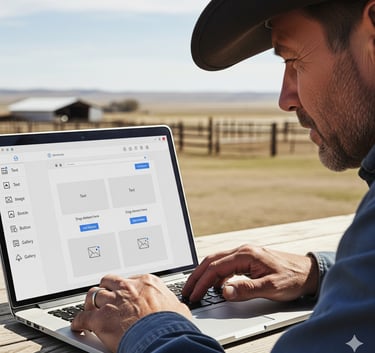
You finish morning chores, pour yourself a second cup of coffee, and sit down at the kitchen table with your laptop. You log into Hostinger (or Wix, or GoDaddy, whichever you picked), choose a farm template, and start plugging in your details. You can visit our Choosing a Builder and Host page for more details.
By the time you’ve had lunch, you’ve got a website that shows your ranch name, a couple of good photos,
and your phone number. That’s it. You didn’t need to call a developer, didn’t need to figure out coding, and didn’t lose your whole weekend. Now when someone Googles your farm, instead of nothing showing up,
they see your website front and center. That builds trust. That gets you calls.
That’s business.
But What If You Get Stuck?
Here’s the good news: all these builders have AI assistants, live chat, and step-by-step guides. You’re not on your own. Think of it like calling the extension office when you need advice — there’s help when you need it.
And if you’d rather keep things super hands-off, some platforms (like GoDaddy) even offer done-for-you services, though most farmers and ranchers I talk to are surprised how easy it is once they start.
Wrapping It Up
Building your farm website doesn’t have to be a chore. With today’s builders, it’s more like filling out a form and clicking “publish.”
Pick a domain
Select a template
Add your basics
Publish
That’s it. Simple, quick, and powerful.
👉 Want to see how this all comes together? Our Step-by-step guide to building a farm website walks through each choice in detail and shows which platform might be the best fit for your farm or ranch.
© 2025. All rights reserved.
Please note that some of the links on this website are affiliate links. This means that if you click on a link and make a purchase, we may receive a small commission at no extra cost to you. We only recommend products and services that we believe are of value